Pan
Der antike Gott Pan gehört zu den langlebigsten und wandlungsfähigsten Figuren der europäischen Bild- und Kulturgeschichte. Von den archaischen Ursprüngen als halb tierischer Naturdämon bis zu seiner massenmedialen Metamorphose in der Figur des Peter Pan hat er unzählige Transformationen erfahren. In dieser modernen Allegorie erscheint Pan als ewiger Junge – eine Vorstellung zeitloser Unschuld, die jedoch das Ergebnis tiefgreifender kultureller Überschreibungen ist.
Der ursprüngliche Pan verkörperte das Ungezähmte: Naturgewalt, Ekstase und Angst. In der christlichen Ikonografie wurde diese Gestalt dämonisiert und zum Vorbild des Teufels; in der Figur des Mephisto lebt sie als ambivalentes Prinzip fort. Als Teil des dionysischen Gefolges steht Pan zudem für Rausch, Verwandlung und Kontrollverlust – Motive, die die Ordnung der Zivilisation immer wieder unterlaufen.
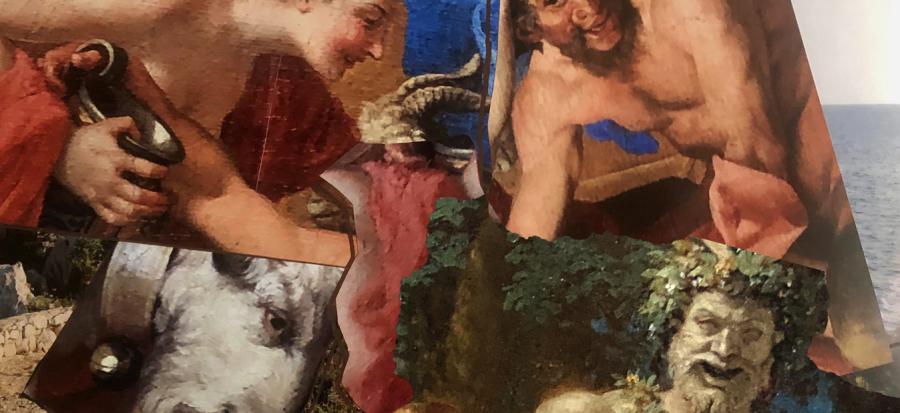
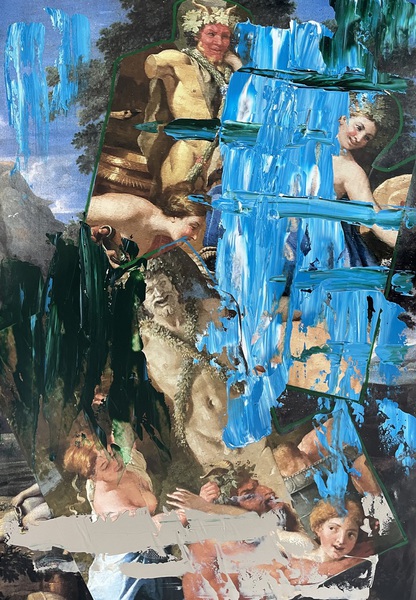
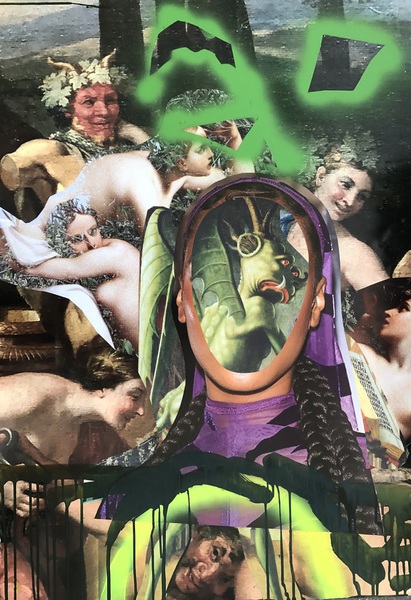
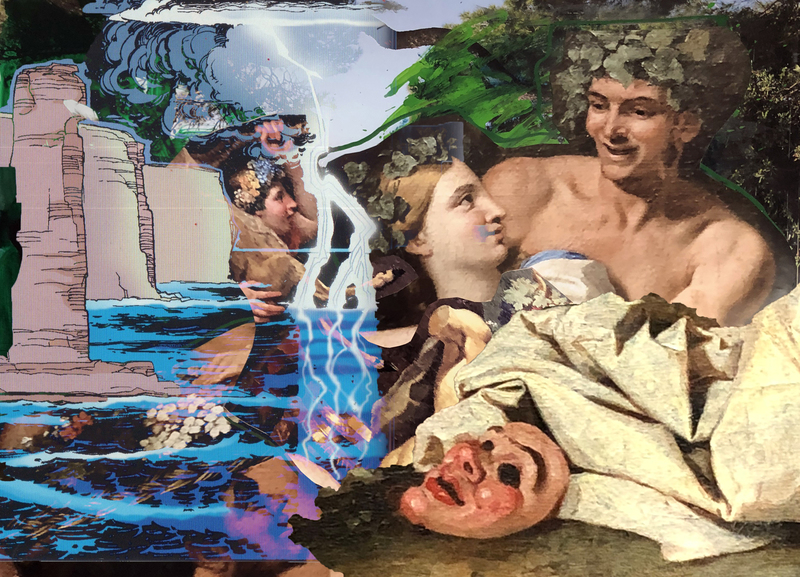
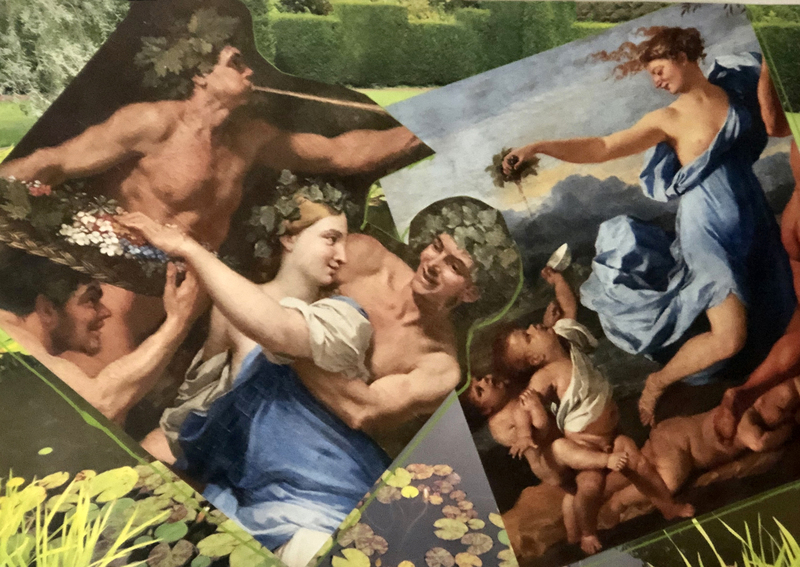
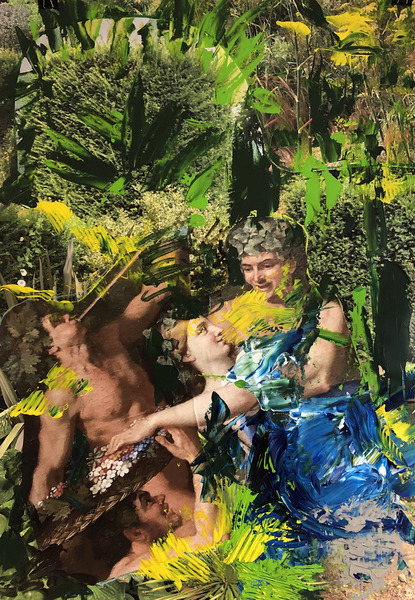
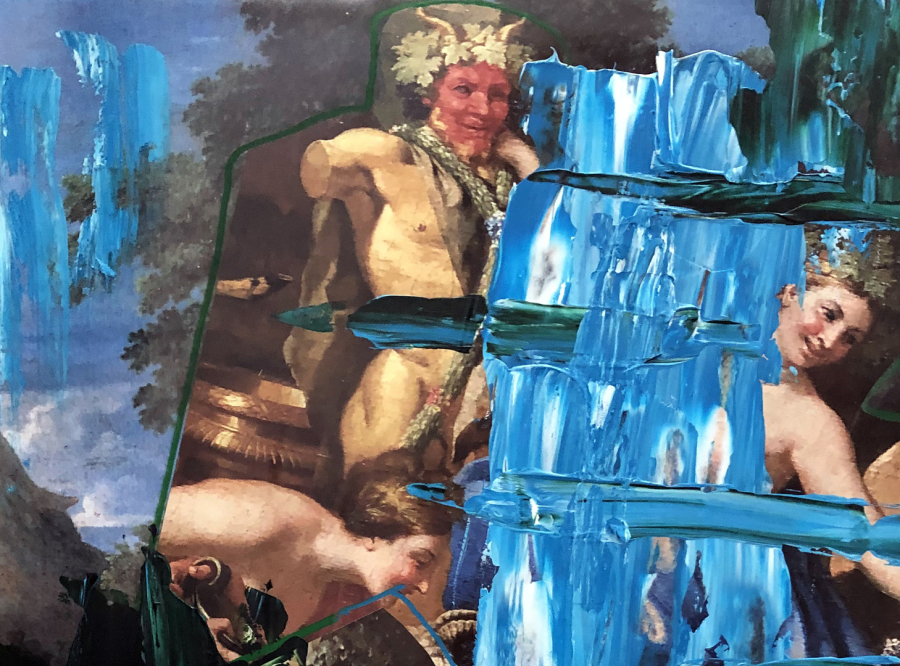
Meine Collageserie Pan greift diese Geschichte des Wandels und der Verdrängung auf. Durch Obliteration – Übermalung, Fragmentierung und Verdeckung – werden klassische Bildmotive nicht eliminiert, sondern in einen Zustand produktiver Störung versetzt. Sichtbarkeit und Auslöschung, Bewahrung und Verletzung fallen dabei zusammen. Pan erscheint nicht als feste Figur, sondern als schwebendes Prinzip zwischen Gott und Dämon, Mythos und Popkultur. Die Arbeiten lesen sich als visuelle Archäologie: als Bilder eines Nachlebens, das sich in Spuren, Brüchen und Überlagerungen manifestiert.
 Druckversion