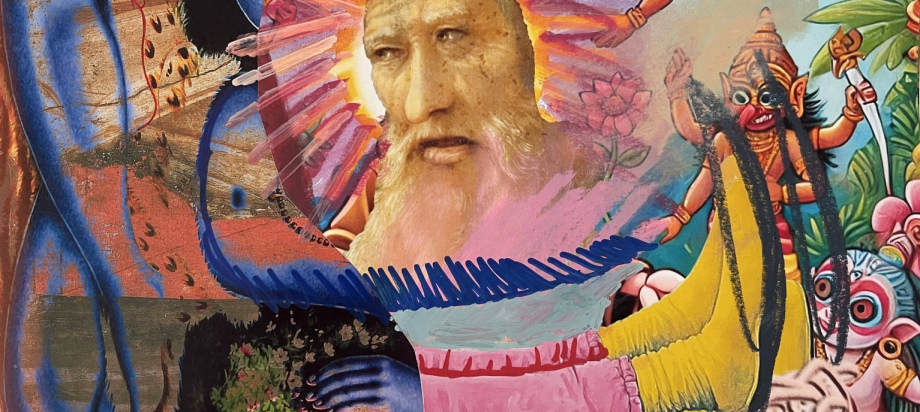
Versuchungen des hl. Antonius
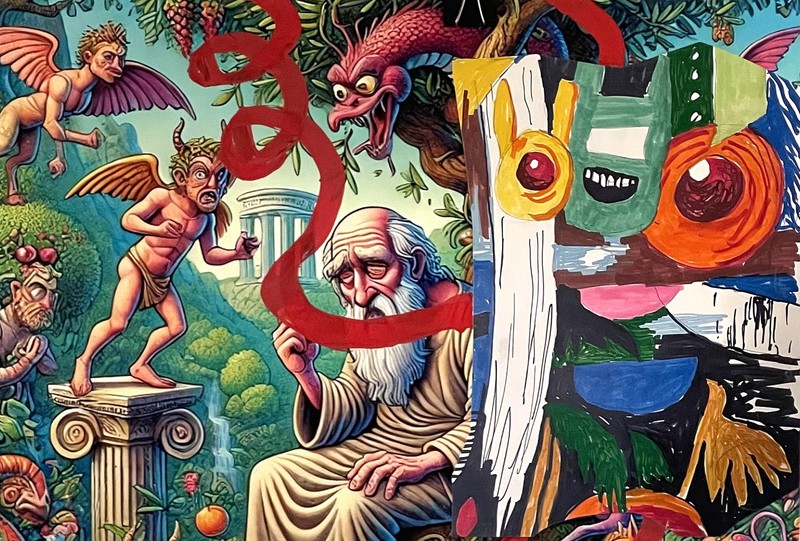
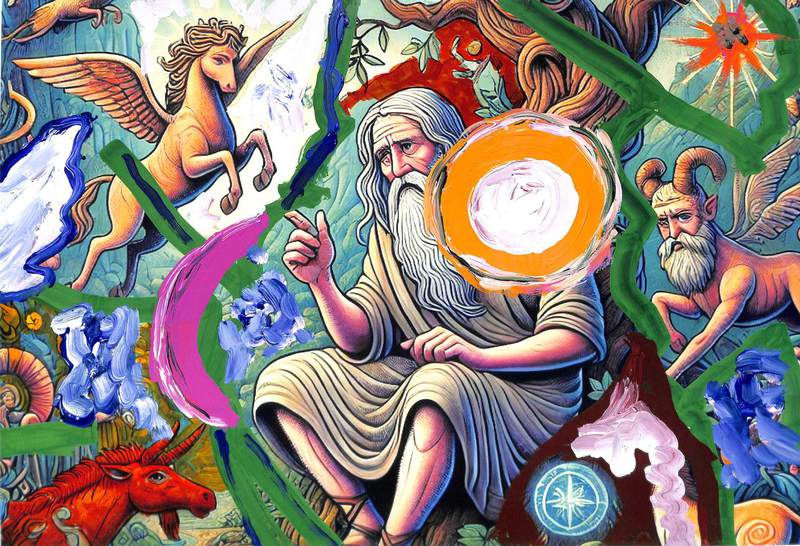
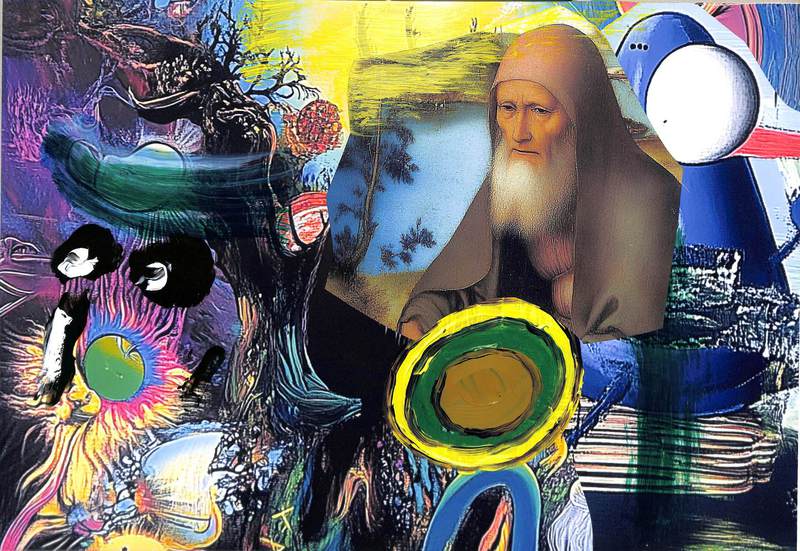
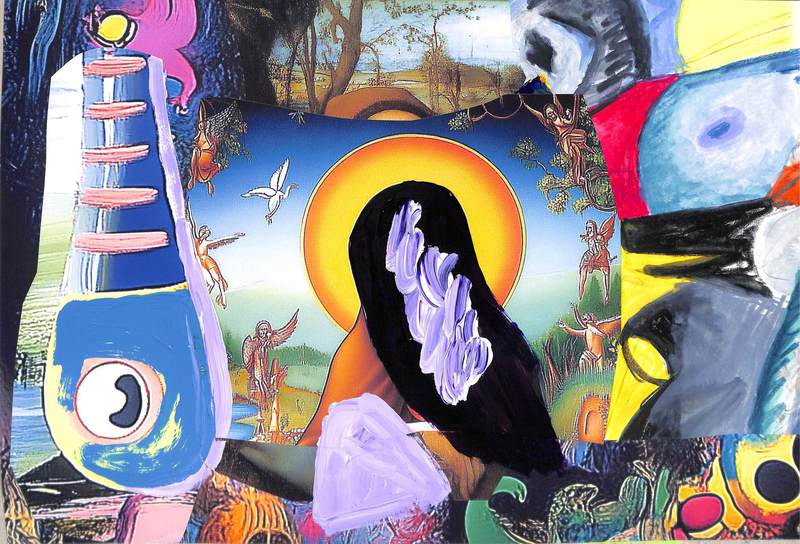
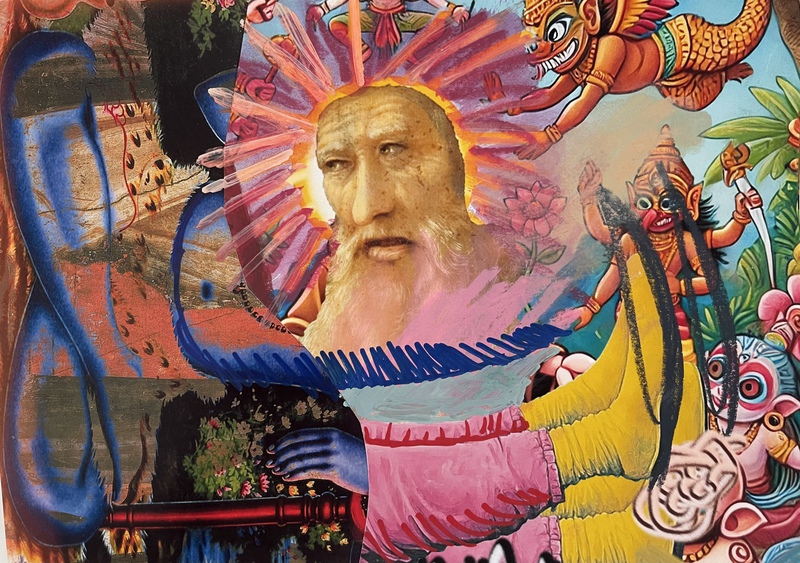
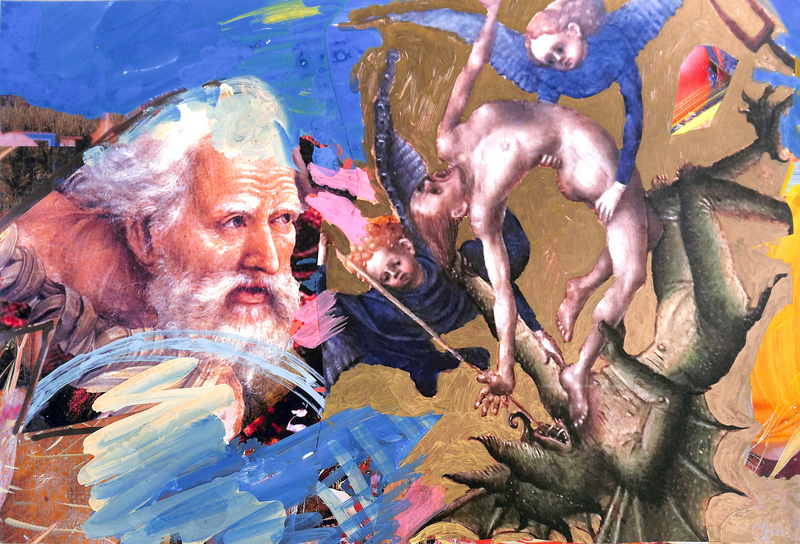
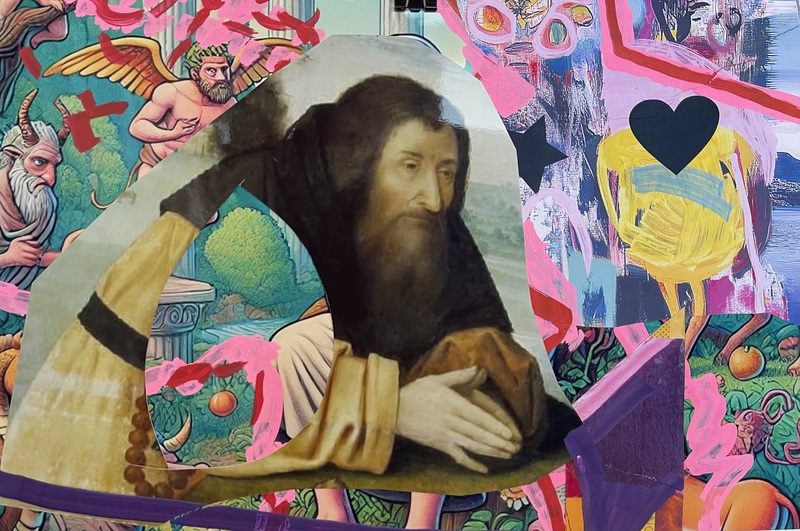
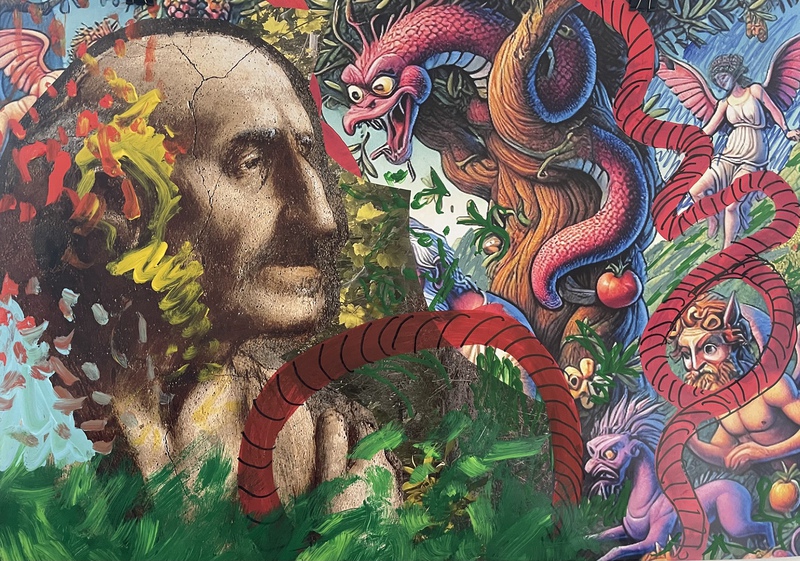
Die Serie „Versuchung des hl. Antonius“ greift eines der großen Bildthemen der europäischen Kunstgeschichte auf und überführt es in die visuelle Sprache der Gegenwart. An die Stelle der klassischen Dämonen, Monster und Visionen treten digitale Bildwelten, Comicfiguren, Pop-Ikonen, Fragmente der Kunstgeschichte und expressive malerische Eingriffe. Die Versuchung erscheint nicht mehr als religiöses Ereignis, sondern als permanenter Bilderstrom einer medial überformten Wirklichkeit.
Die Collagen verbinden historische Darstellungen des heiligen Antonius mit Zitaten aus Malerei, Werbung, künstlicher Intelligenz und Popkultur. Durch Übermalungen, Überklebungen und bewusste Bildstörungen verlieren die überlieferten Motive ihre Eindeutigkeit und werden zu offenen Zeichenfeldern. Vergangenheit und Gegenwart, Sakrales und Profanes, Ernst und Ironie begegnen sich auf derselben Bildfläche.
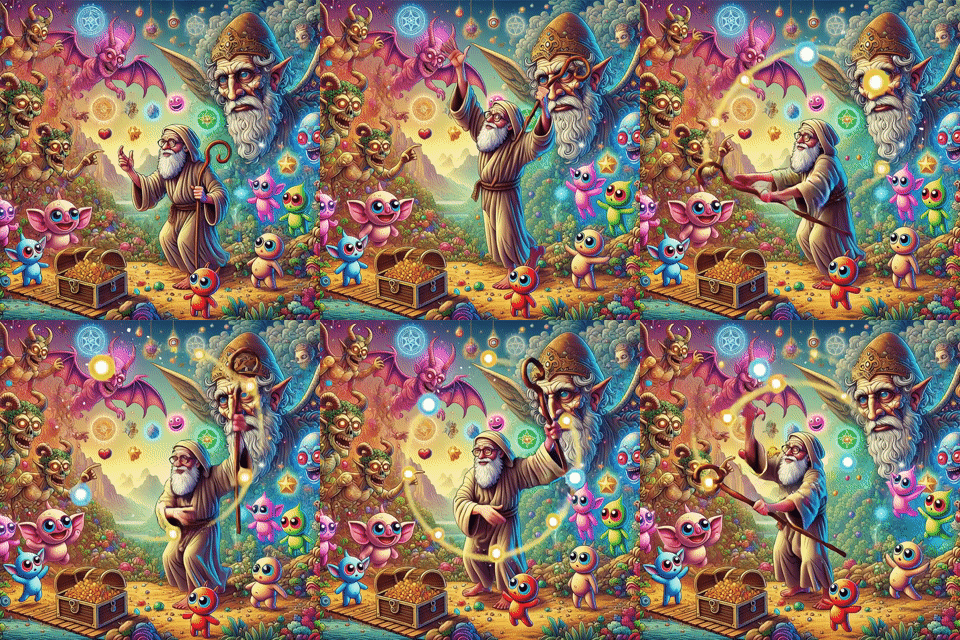 Versuchung des hl. Antonius, 2025, GIF
 Druckversion