Kunst als Ereignis
Das Denken des Ereignisses bei Gilles Deleuze markiert eine leise, aber radikale Verschiebung innerhalb der Philosophie. Es ist keine Theorie unter anderen, sondern ein Perspektivwechsel, der die Grundfrage nach dem Sein selbst neu stellt. An die Stelle stabiler Dinge, Substanzen und Identitäten tritt ein Gefüge aus Prozessen, Übergängen und Singularitäten. Wirklichkeit erscheint nicht länger als Bestand, sondern als Geschehen.
Diese Verschiebung richtet sich gegen eine lange metaphysische Tradition, deren paradigmatische Gestalten sich bei Plato und Aristotle finden lassen. Dort wird das Seiende als etwas gedacht, das eine bestimmbare Essenz besitzt und dessen Veränderungen sekundär sind. Deleuze hingegen löst diese Priorität des Seins auf: Nicht das Ding ist primär, sondern das, was geschieht. Dinge sind keine stabilen Einheiten, sondern Resultate von Prozessen, Verdichtungen von Ereignissen. Ein Körper ist nicht Träger von Eigenschaften, sondern ein Gefüge von Kräften, Intensitäten und Übergängen, das sich fortwährend verändert.
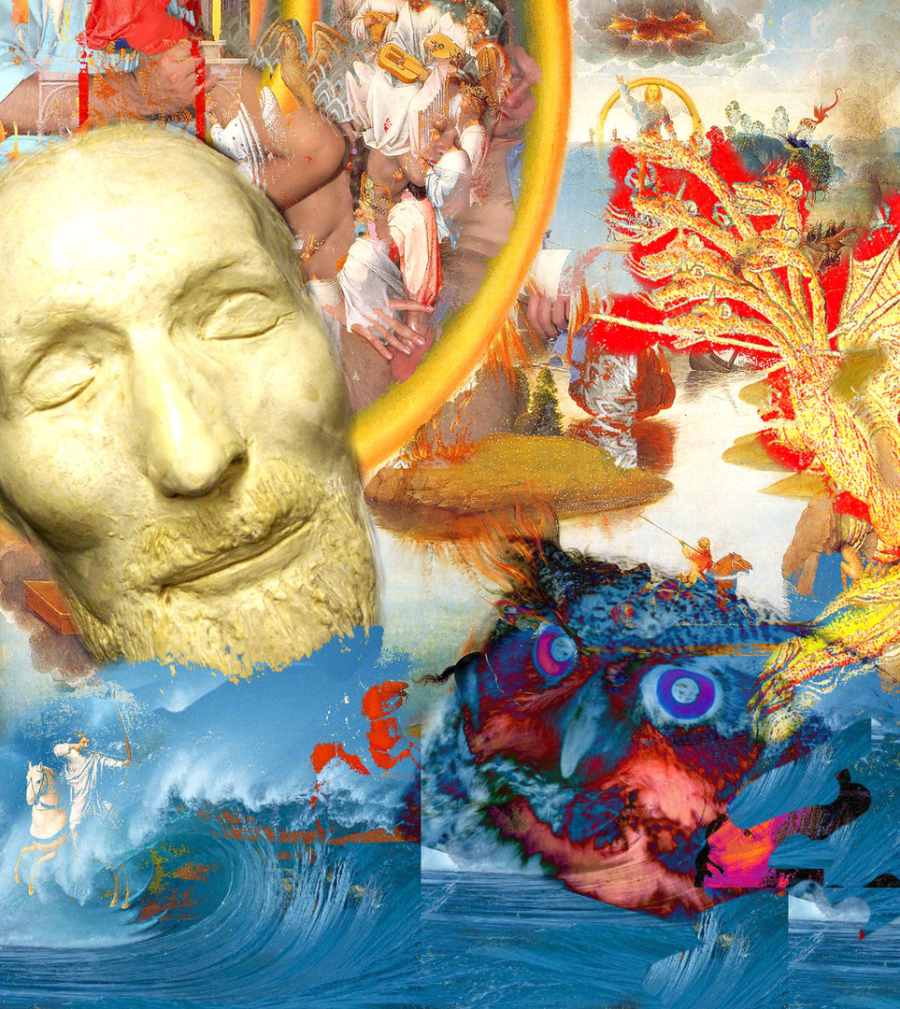 Zeit-Raum-Spiel 03, 2007, Fine Art Print, 80 x 80 cm
Das Ereignis als Sinn und Virtualität
Das Ereignis selbst ist dabei kein bloß empirisches Vorkommnis. Es ist nicht einfach das, was „passiert“, sondern eine eigene Dimension der Realität. In seiner Logik des Sinns entwickelt Deleuze – in Auseinandersetzung mit der stoischen Philosophie – den Begriff des Ereignisses als etwas „Inkorporales“. Ereignisse sind nicht materiell, sie lassen sich nicht auf Körper oder Zustände reduzieren, und doch sind sie real. Sie existieren an der Oberfläche der Dinge als Sinn. So ist etwa eine historische Schlacht nicht identisch mit den physischen Bewegungen von Körpern, Waffen und Territorien; sie ist ein Ereignis, das diese Bewegungen übersteigt und ihnen eine bestimmte Bedeutung verleiht. Das Ereignis ist gewissermaßen der Ausdruck dessen, was geschieht, ohne selbst ein Ding zu sein.
Mit dieser Bestimmung verbindet sich Deleuzes Unterscheidung zwischen dem Virtuellen und dem Aktuellen. Das Virtuelle ist bei ihm keineswegs das Unwirkliche, sondern eine reale Dimension, die nicht vollständig aktualisiert ist. Ereignisse gehören dieser virtuellen Ebene an: Sie sind Felder von Möglichkeiten, die sich in konkreten Situationen unterschiedlich ausprägen können. Das Aktuelle ist nur eine bestimmte Realisierung des Virtuellen, niemals dessen vollständige Ausschöpfung. In diesem Sinne ist jedes Ereignis mehr als das, was tatsächlich geschieht; es enthält einen Überschuss an Potenzial, eine Offenheit, die sich nicht erschöpfen lässt.
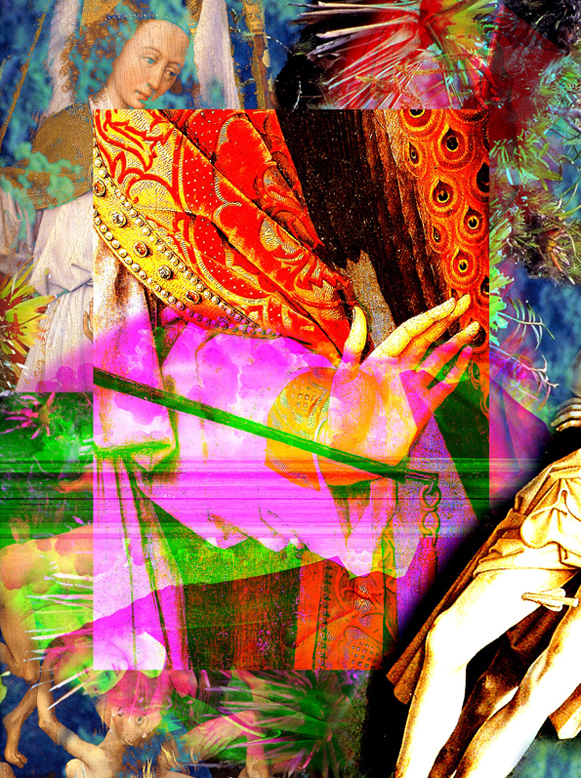 Zeit-Raum-Spiel 04, Fine Art Print, 80 x 60 cm
Werden und Zeitlichkeit des Ereignisses
Diese Ontologie des Ereignisses ist untrennbar mit einer Philosophie des Werdens verbunden. Deleuze steht hier in der Nähe von Henri Bergson, dessen Begriff der Dauer die Zeit nicht als Abfolge diskreter Momente, sondern als kontinuierliche Bewegung versteht. Für Deleuze gibt es keine festen Identitäten, die sich im Laufe der Zeit verändern; vielmehr sind Identitäten selbst Effekte von Prozessen. Das Werden ist nicht etwas, das einem Sein widerfährt, sondern die Grundstruktur der Realität. Ereignisse sind die elementaren Formen dieses Werdens.
In diesem Zusammenhang gewinnt auch die Zeit eine neue Gestalt. Deleuze unterscheidet zwischen Chronos, der messbaren, linearen Zeit, und Aion, einer reinen Ereigniszeit. Während Chronos die Zeit der Körper und Zustände ist, gehört das Ereignis dem Aion an: einer Zeit, die sich jeder Gegenwärtigkeit entzieht. Das Ereignis ist niemals einfach präsent; es ist zugleich schon geschehen und noch im Kommen. Es bewegt sich entlang einer Linie, die die Gegenwart spaltet, ohne sich in ihr festzusetzen. Diese eigentümliche Temporalität macht verständlich, warum Ereignisse nicht vollständig beobachtbar oder feststellbar sind: Sie entziehen sich jeder vollständigen Aktualisierung.
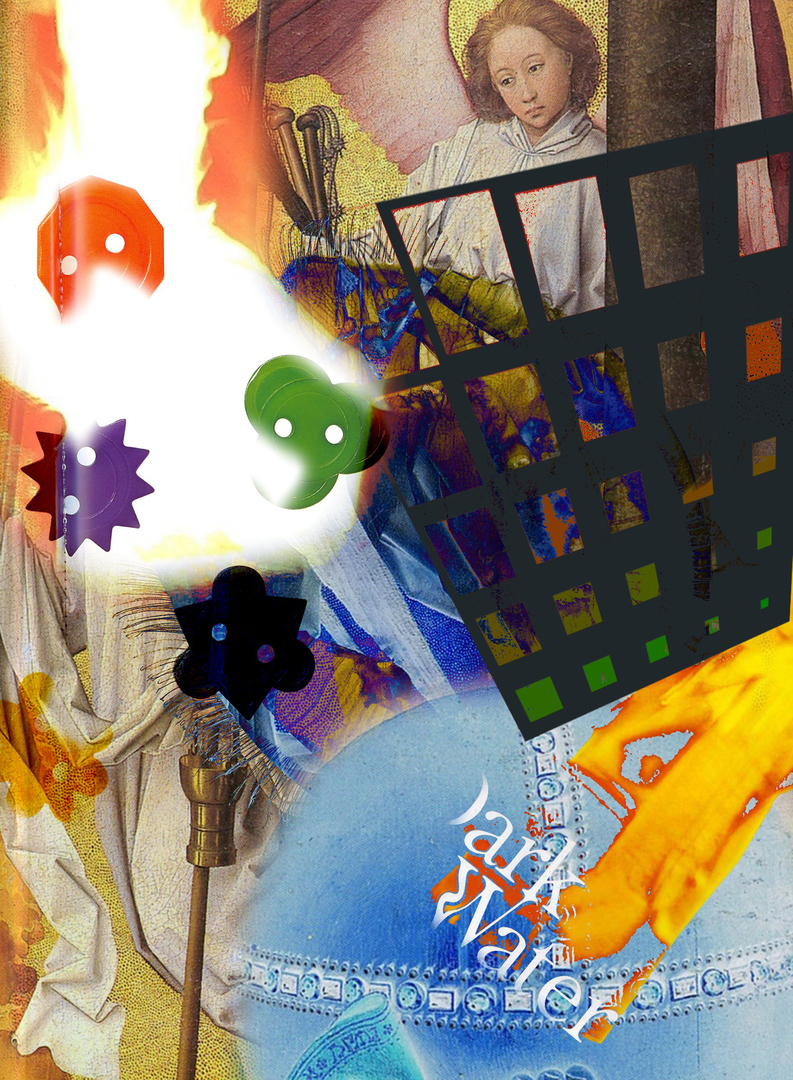 Zeit-Raum-Spiel 06, 2007, Fine Art Print, 60 x 80 cm
Leibniz, das Orakel und die Struktur des Möglichen
Ein besonderer Akzent ergibt sich aus Deleuzes Rückgriff auf Gottfried Wilhelm Leibniz. Am Ende der Theodizee steht die berühmte Orakelgeschichte: Sextus Tarquinius befragt das Orakel und erfährt, dass er ein Verbrechen begehen werde. Diese Weissagung ist keine einfache Vorhersage, sondern eröffnet eine eigentümliche Struktur von Möglichkeit und Notwendigkeit. Sextus könnte anders handeln – und doch gehört gerade diese Möglichkeit zur Welt, die sich tatsächlich verwirklicht.
Für Leibniz dient diese Szene dazu, seine Lehre der möglichen Welten zu illustrieren: Jede mögliche Welt ist eine vollständige Serie von Ereignissen, und Gott wählt die beste unter ihnen aus. Deleuze jedoch liest diese Konstellation anders. Für ihn zeigt sich hier nicht die Vorauswahl einer fertigen Welt, sondern die Logik des Ereignisses selbst. Das Orakel artikuliert kein festes Schicksal, sondern ein Problemfeld, eine virtuelle Struktur, die sich in unterschiedlichen Weisen aktualisieren kann.
Das Ereignis – etwa der Verrat – ist nicht identisch mit der einzelnen Handlung. Es ist die problematische Singularität, die verschiedene Aktualisierungen zulässt. In diesem Sinne transformiert Deleuze die leibnizianischen möglichen Welten in eine Ontologie des Virtuellen: Nicht Gott wählt zwischen fertigen Welten, sondern die Wirklichkeit selbst entfaltet sich als Feld von Möglichkeiten, in dem Ereignisse ihre jeweiligen Aktualisierungen hervorbringen.
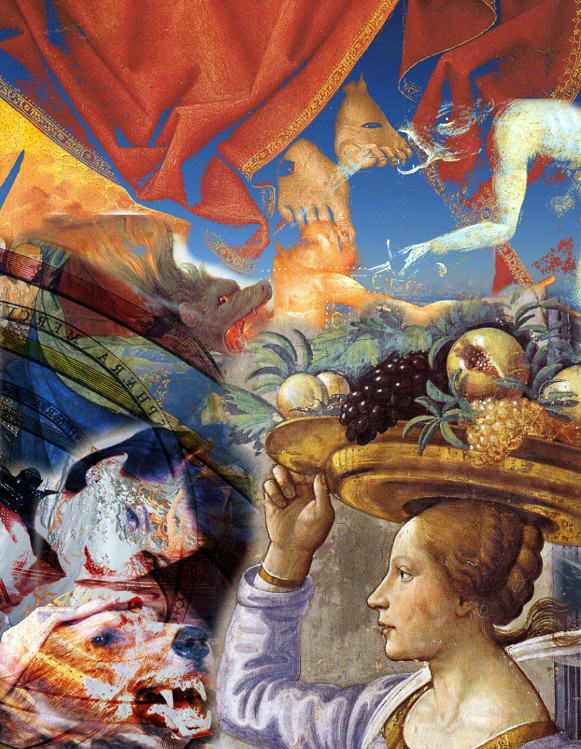 Zeit-Raum-Spiel 08, 2007, Fine Art Print, 80 x 60 cm
Ethik der Bejahung
Diese Perspektive hat schließlich eine ethische Konsequenz. Unter dem Einfluss von Friedrich Nietzsche wird das Ereignis nicht mehr als bloße Tatsache oder als zu bewertendes Geschehen verstanden, sondern als etwas, das bejaht und gestaltet werden muss. Wenn jedes Ereignis mehr enthält, als es aktualisiert, dann besteht die Aufgabe nicht darin, es zu kontrollieren oder zu verurteilen, sondern darin, seine Potenziale freizulegen.
Die Frage verschiebt sich: nicht mehr „Warum geschieht dies?“, sondern „Was kann daraus werden?“. Auch die Orakelgeschichte erhält so einen neuen Sinn. Sie zeigt nicht die Unausweichlichkeit eines Schicksals, sondern die Weise, in der ein Ereignis gelebt wird – als Aktualisierung einer offenen Struktur.
So lässt sich Deleuzes Ereignis-Denken als eine Ontologie des Übergangs begreifen. Es ersetzt die Logik der Substanz durch eine Logik der Prozesse, die Fixierung durch Bewegung, die Identität durch Differenz. Wirklichkeit ist nicht das, was ist, sondern das, was geschieht – und was geschehen kann. In diesem Sinne ist das Ereignis kein Gegenstand des Denkens unter anderen, sondern die Bedingung dafür, dass überhaupt etwas wie Wirklichkeit gedacht werden kann.
Art as Event
Gilles Deleuze’s conception of the event marks a subtle yet radical shift within philosophy. It is not merely one theory among many, but a shift in perspective that reframes the fundamental question of being itself. Stable entities, substances, and identities are replaced by a fabric of processes, transitions, and singularities. Reality no longer appears as a state of being, but as an unfolding.
This shift challenges a long metaphysical tradition whose paradigmatic figures can be found in Plato and Aristotle. There, being is conceived as something possessing a definable essence, with its changes being secondary. Deleuze, however, dissolves this priority of being: it is not the thing that is primary, but what happens. Things are not stable units, but results of processes, condensations of events. A body is not a bearer of properties, but a structure of forces, intensities, and transitions that is constantly changing.
The Event as Meaning and Virtuality
The event itself is not merely an empirical occurrence. It is not simply what “happens,” but a distinct dimension of reality. In his logic of meaning—drawing on Stoic philosophy—Deleuze develops the concept of the event as something “incorporeal.” Events are not material; they cannot be reduced to bodies or states, and yet they are real. They exist on the surface of things as meaning. Thus, for example, a historical battle is not identical with the physical movements of bodies, weapons, and territories; it is an event that transcends these movements and imbues them with a specific meaning. The event is, in a sense, the expression of what is happening, without itself being a thing.
This definition is linked to Deleuze’s distinction between the virtual and the actual. For him, the virtual is by no means the unreal, but a real dimension that is not fully actualized. Events belong to this virtual plane: they are fields of possibilities that can manifest differently in concrete situations. The actual is only a specific realization of the virtual, never its complete exhaustion. In this sense, every event is more than what actually happens; it contains a surplus of potential, an openness that cannot be exhausted.
Becoming and the Temporality of the Event
This ontology of the event is inseparably linked to a philosophy of becoming. Here, Deleuze aligns closely with Henri Bergson, whose concept of duration understands time not as a succession of discrete moments, but as continuous movement. For Deleuze, there are no fixed identities that change over time; rather, identities themselves are effects of processes. Becoming is not something that happens to a being, but the fundamental structure of reality. Events are the elementary forms of this becoming.
In this context, time also takes on a new form. Deleuze distinguishes between Chronos, measurable, linear time, and Aion, a pure time of events. While Chronos is the time of bodies and states, the event belongs to Aion: a time that eludes any present moment. The event is never simply present; it is at once already past and still to come. It moves along a line that splits the present without becoming fixed within it. This peculiar temporality explains why events cannot be fully observed or determined: they elude any complete actualization.
Leibniz, the Oracle, and the Structure of the Possible
A particular emphasis arises from Deleuze’s reference to Gottfried Wilhelm Leibniz. At the end of Theodicy stands the famous oracle story: Sextus Tarquinius consults the oracle and learns that he will commit a crime. This prophecy is not a simple prediction, but opens up a peculiar structure of possibility and necessity. Sextus could act differently—and yet it is precisely this possibility that belongs to the world that actually comes to pass.
For Leibniz, this scene serves to illustrate his doctrine of possible worlds: every possible world is a complete series of events, and God selects the best among them. Deleuze, however, reads this constellation differently. For him, what is revealed here is not the preselection of a finished world, but the logic of the event itself. The oracle articulates not a fixed fate, but a field of problems, a virtual structure that can actualize itself in various ways.
The event—such as the betrayal—is not identical to the individual action. It is the problematic singularity that allows for various actualizations. In this sense, Deleuze transforms Leibniz’s possible worlds into an ontology of the virtual: it is not God who chooses between finished worlds, but reality itself that unfolds as a field of possibilities in which events bring about their respective actualizations.
Ethics of Affirmation
This perspective ultimately has an ethical consequence. Under the influence of Friedrich Nietzsche, the event is no longer understood as a mere fact or as a occurrence to be judged, but as something that must be affirmed and shaped. If every event contains more than it actualizes, then the task is not to control or condemn it, but to uncover its potentials.
The question shifts: no longer “Why is this happening?” but “What can come of it?” The story of the oracle thus takes on a new meaning. It does not show the inevitability of fate, but the way in which an event is lived—as the actualization of an open structure.
Thus, Deleuze’s conception of the event can be understood as an ontology of transition. It replaces the logic of substance with a logic of processes, fixation with movement, identity with difference. Reality is not what is, but what happens—and what can happen. In this sense, the event is not just another object of thought, but the condition for the possibility of thinking of anything as reality at all.
 Druckversion