Apokalypse
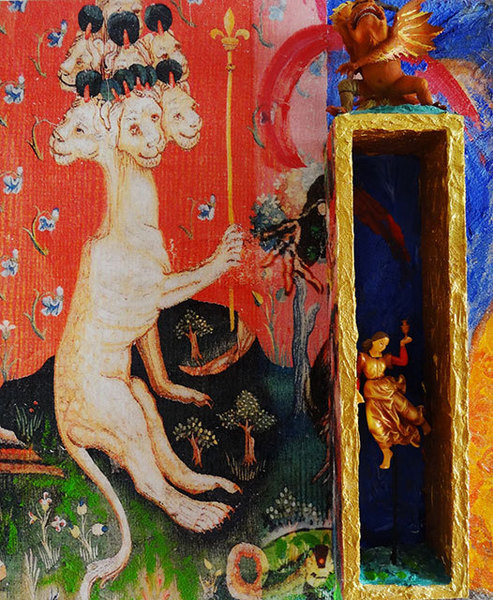
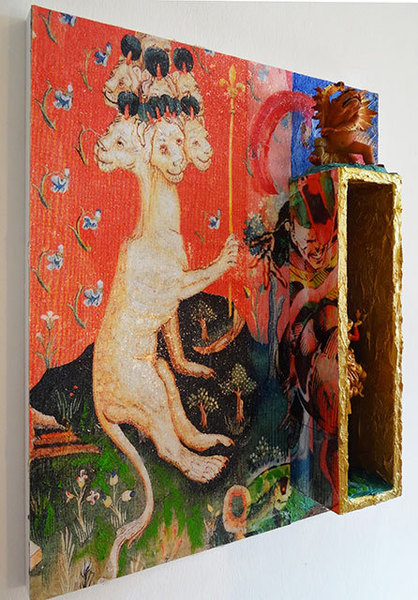
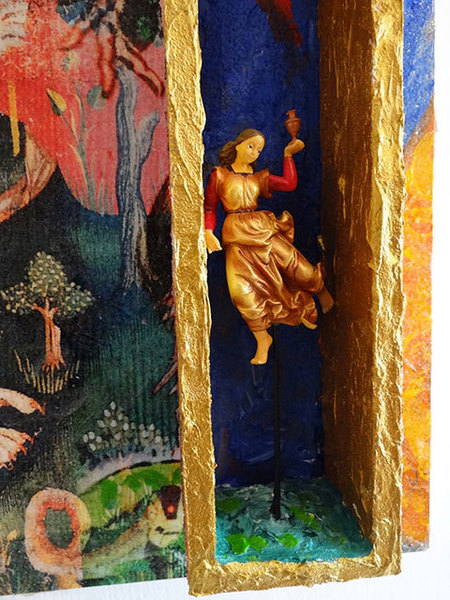
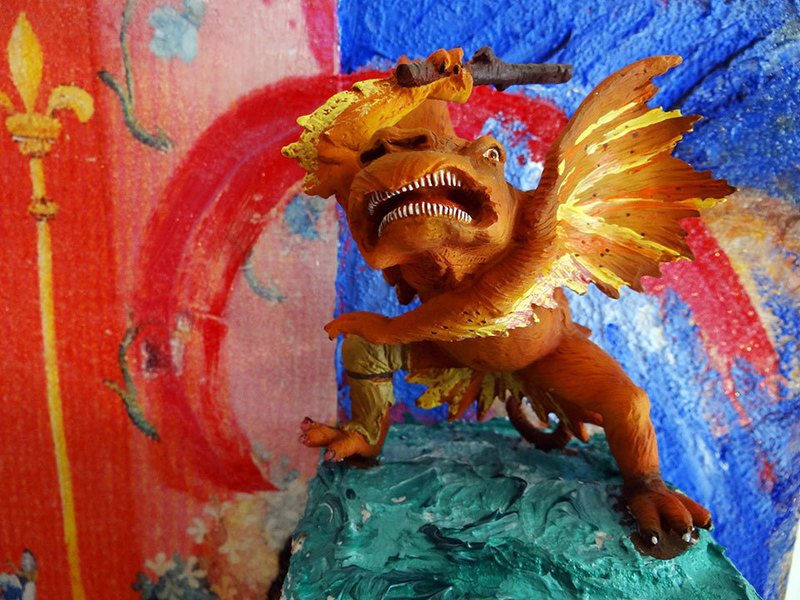
Warum wähle ich aus einer Tapisserie-Bildfolge, die im Spätmittelalter entstanden ist (Tapisserie von Angers), vorrangig Bildelemente für meine digitalen Collagen (wie hier die "Apokalypse"), obwohl offensichtlich die moderne Apokalyptik in Text und Bild nur mehr marginal von der religiösen Thematik bestimmt ist, wie sie am Ende des Neuen Testaments in der sogenannten „Offenbarung des Johannes“ erscheint?
Mich hat als Künstler von Anfang an das Problem interessiert, inwieweit man aus Bildern, die aus ihrem ursprünglichen Kontext entfernt werden, neue künstlerische Thematiken gewinnen kann. Im Falle früherer, z.B. christlicher Bilder , erhöht sich deren Komplexität, da sie nie nur rein religiöse, sondern auch repräsentative, artifizielle, mythologische, politische und andere Bedeutungen haben.
Doch halt! Wir sehen sie doch unter der Optik des entwerfenden Hofmalers von Ludwig I. von Anjou, Jan Bondol („Hennequin von Brügge“).
Da kommt noch die Sprache der Comics ins Bild, die, farblich nuanciert, die gewebten Bilder der Tapisserien – heute im Original zu sehen auf mehr als 120m Länge und 4m Höhe im Schloss von Angers – überlagern, destruieren und ergänzen?
Der Autor dieser ressentimentgeladenen apokalyptischen Vision namens Johannes wurde wohl auf die Insel Patmos, wo man heute Urlaub macht, verbannt zur Zeit des Kaisers Domitian, gegen 95 n. Chr.:
"Ich war auf der Insel Patmos um des Wortes Gottes willen und des Zeugnisses für Jesus.
Am Tag des Herrn wurde ich vom Geist ergriffen und hörte hinter mir eine Stimme, laut wie eine Posaune: Sie sprach: Schreib das, was du siehst, in ein Buch"
Why do I primarily select visual elements from a series of tapestries created in the late Middle Ages (the Angers Tapestries) for my digital collages (such as the “Apocalypse” shown here), even though modern apocalyptic themes in text and image are obviously only marginally determined by religious subject matter, as they appear at the end of the New Testament in the so-called “Revelation of John”?
As an artist, I have been interested from the very beginning in the extent to which new artistic themes can be derived from images removed from their original context. In the case of earlier, e.g., Christian images, their complexity increases, as they never have purely religious meanings, but also representational, artificial, mythological, political, and other meanings.
But wait! We see them through the lens of the court painter to Ludwig I of Anjou, Jan Bondol (“Hennequin of Bruges”).
Then the language of comics enters the picture, which, with its nuanced colors, overlays, disrupts, and complements the woven images of the tapestries—now on view in their original form, spanning more than 120 meters in length and 4 meters in height, at the Château d’Angers?
The author of this resentment-laden apocalyptic vision, named John, was likely exiled to the island of Patmos—where people vacation today—during the reign of Emperor Domitian, around 95 CE:
"I was on the island of Patmos for the sake of the word of God and the testimony of Jesus.
On the Lord’s Day, I was caught up in the Spirit and heard a voice behind me, loud as a trumpet: It said, ‘Write down what you see in a book.’”
 Teilen
 Druckversion