Fragmente
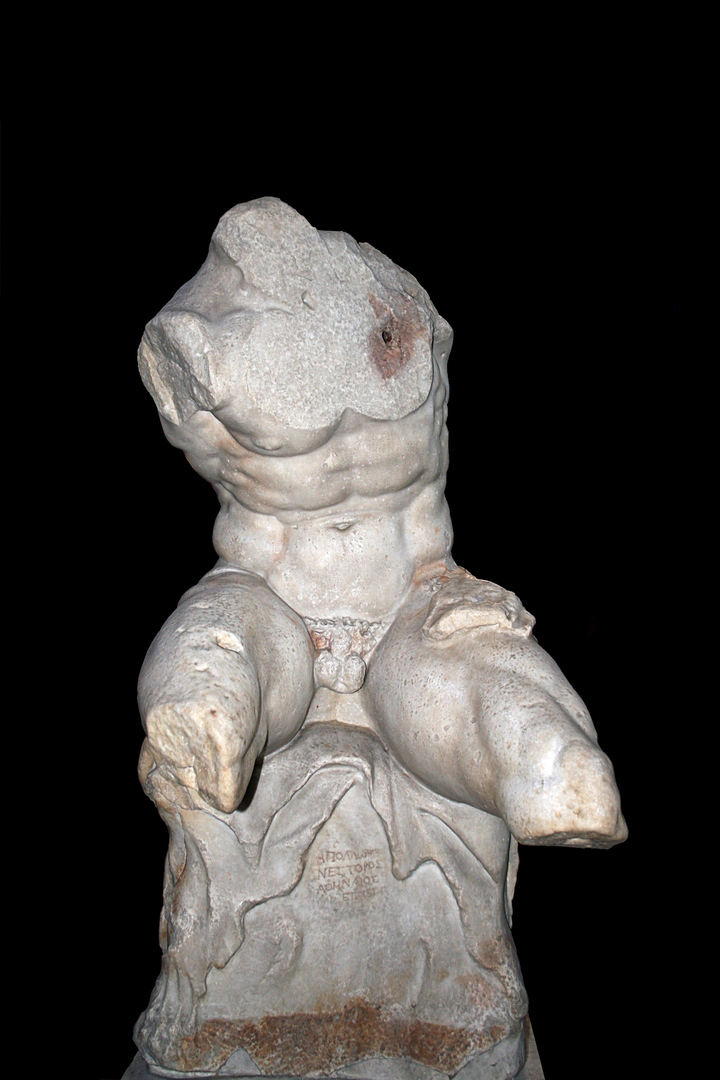 Torso vom Belvedere, römisch
„Denn da ist keine Stelle,
die dich nicht sieht.
Du musst dein Leben ändern.“
Rainer Maria Rilke, Archaïscher Torso Apollos
Fragmente tragen eine doppelte Bedeutung: Sie sind Spuren eines Ganzen, das verloren ging – und zugleich Bausteine eines Neuen, das erst noch entstehen will. In meiner Bildwelt wird das Fragment daher nicht als Defizit begriffen, sondern als produktiver Zustand. Es verweist auf Abwesenheit und Möglichkeit zugleich. Diese Spannung zwischen Verlust und Potenzial bildet das Fundament meines Weltbildes: Wirklichkeit erscheint nicht mehr als geschlossene Einheit, sondern als offenes Gefüge aus heterogenen Elementen.
Das Gedicht "Archaïscher Torso Apollos" von Rainer Maria Rilke bildet hierfür eine zentrale poetische Referenz. Rilke beschreibt eine beschädigte Statue – ohne Kopf, ohne vollständige Körperlichkeit – und doch entfaltet gerade dieses Fragment eine ungeheure Präsenz. Der Torso „glüht noch wie ein Kandelaber“. Aus allen seinen Rändern bricht ein inneres Leuchten hervor. Das Fragment besitzt eine Intensität, die über die physische Vollständigkeit hinausgeht. Es sieht den Betrachter an – und damit entwickelt sich ein Dialog.
Fragmentierte Formen
In meinen Bildwelten erscheinen Körper, Köpfe und Räume selten als geschlossene Einheiten. Linien brechen ab, Formen lösen sich auf, Konturen bleiben tastend. Einzelne Motive stehen nebeneinander, ohne sich zu einer stabilen Figur zu fügen.
Das Fragment wird zur elementaren Bildsprache. Es ist nicht Rest, sondern Ausgangspunkt.
Wie bei Rilkes Torso entsteht aus der Unvollständigkeit eine Verdichtung. Ein isoliertes Gesicht im gelblichen Oval, steinerne Kopfstrukturen, amorphe Körperansätze – sie wirken wie Überbleibsel einer größeren Ordnung, die sich entzieht. Doch gerade dadurch eröffnen sie Deutungsräume.
Das Unvollständige zwingt zur aktiven Wahrnehmung. Es fordert Ergänzung, Imagination, Mitdenken, Antworten
Hier stellt sich eine Verbindung zu Peter Sloterdijk und seinem "Buch Du musst dein Leben ändern". ein.(1) Sloterdijk liest Rilkes berühmten Schlußvers nicht nur als poetische Pointe, sondern als anthropotechnische Forderung: Der Mensch ist ein übendes Wesen. Er steht unter einem permanenten Imperativ der Selbstformung.
Das Fragment in meiner Arbeit kann in diesem Sinne als Trainingsfeld verstanden werden. Es konfrontiert den Betrachter mit dem Unfertigen – und fordert ihn heraus, seine Wahrnehmung, seine Sehgewohnheiten, seine Erwartungen zu verändern. Die ästhetische Fragmentierung wird zu einer dialogischen Übung im Umgang mit Komplexität und Fragmentarität..
Räumliche Zersplitterung
Auch der Raum meiner Arbeiten ist fragmentiert. Farbflächen in Blau, Pink, Gelb oder Grün bilden keine einheitliche Perspektive. Sie stehen nebeneinander wie autonome Zonen. Es gibt keine zentrale Ordnung, kein geschlossenes Raumkontinuum.
Hier lässt sich eine Verbindung zu Sloterdijks Denken ziehen, insbesondere zu seiner Vorstellung pluraler „Sphären“.(2) Welt ist kein monolithischer Raum, sondern ein Nebeneinander von Innenräumen, Blasen, Schäumen – koexistierend, überlappend, aber nicht homogen.
Meine Bildwelt spiegelt diese Struktur: verschiedene Realitätsfragmente existieren parallel, ohne sich zu einer stabilen Totalität zusammenzufügen. Die Arbeit verweigert eine eindeutige Hierarchie. Sie zeigt eine Welt, die aus Koexistenz besteht, nicht aus Einheit.
Fragmentierung wird so zum Modell für ein Weltbild, das Vielschichtigkeit akzeptiert.
Fragmentierte Identität
Besonders deutlich wird die Verbindung von Bildwelt und Weltbild im Motiv der isolierten Teile. Sie erscheinen losgelöst von Körpern. Das Selbst ist geteilt, gebrochen, im Prozess.
Sloterdijk beschreibt den Menschen als ein Wesen, das sich ständig übt, sich transformiert, sich diszipliniert. „Du mußt dein Leben ändern“ wird bei ihm zur kulturellen Grundformel der Selbststeigerung.
Überträgt man diesen Gedanken auf meine Bildwelt, so wird das fragmentierte Subjekt nicht als Verlust von Ganzheit lesbar, sondern als Ausdruck permanenter Selbstformung. Das Ich ist nicht zerbrochen – es ist im Werden.
Doch zugleich bleibt eine Spannung: Während Rilkes Torso eine verborgene Ganzheit suggeriert – „da ist keine Stelle, die dich nicht sieht“ –, zeigt meine Arbeit eher eine Existenz ohne garantierte Einheit. Das Fragment ist hier kein beschädigtes Ganzes, sondern Grundzustand moderner Identität.
Prozess
Die sichtbaren Überlagerungen der Aquarellflächen, die offenen Linien, die Brüche im Material machen den Entstehungsprozess selbst zum Thema. Das Bild bleibt bewusst unfertig. Es scheint sich im Blick des Betrachters weiterzuentwickeln.
Diese Offenheit entspricht einem Weltbild, das Wirklichkeit als Prozess versteht. Nichts ist endgültig fixiert. Alles befindet sich im Übergang.
In diesem Sinne wird das Fragment zur ästhetischen Form des Übens. Es ist kein statischer Zustand, sondern ein Zwischenstadium. Es verweist auf Bewegung.
Bildwelten – Weltbilder als Spiegelung
Meine zersplitterte, offene Bildwelt verweist auf ein Weltbild, das
-
Vielschichtigkeit anerkennt,
-
Veränderung als Grundzustand begreift,
-
Mehrdeutigkeit zulässt,
-
das Fragment nicht als Mangel, sondern als produktive Form versteht.
Im Dialog mit Rilke und Sloterdijk gewinnt das Fragment mehrfache Bedeutungen:
Bei Rilke ist es das Überbleibsel eines idealen Körpers, das
dennoch – oder gerade deshalb – eine ethische Forderung ausspricht.
Bei Sloterdijk wird diese Forderung zur anthropologischen Grundfigur: Der Mensch steht unter dem Imperativ der Selbsttransformation.
In meiner Arbeit wird das Fragment schließlich zur ästhetischen Praxis dieses Gedankens. Es ist nicht nur Motiv, sondern Methode. Es erzeugt eine Bildwelt, die das Offene, das Prozessuale, das Noch-Nicht betont.
Das Fragment sieht uns an.
Es fordert uns heraus.
Es zwingt uns, im Unfertigen Sinn zu suchen.
Und vielleicht liegt darin seine tiefste Bedeutung:
Nicht das Ganze trägt die Wahrheit.
Sondern der Bruch, der uns zwingt, unser Sehen – und damit unser Leben – neu zu ordnen.
(1) Peter Sloterdijk, Du musst dein Leben ändern, Berlin 2012
(2) Peter Sloterdijk, Schäume, Berlin 2004
 Druckversion