Passion
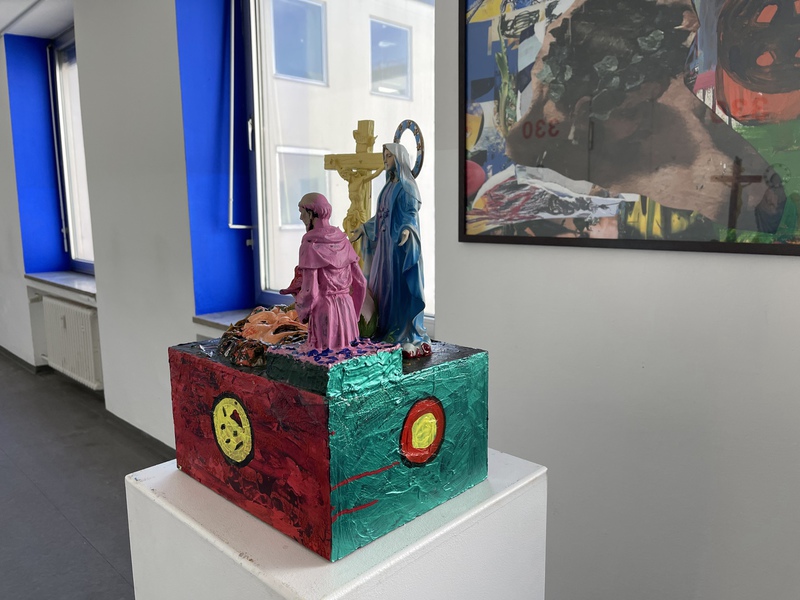
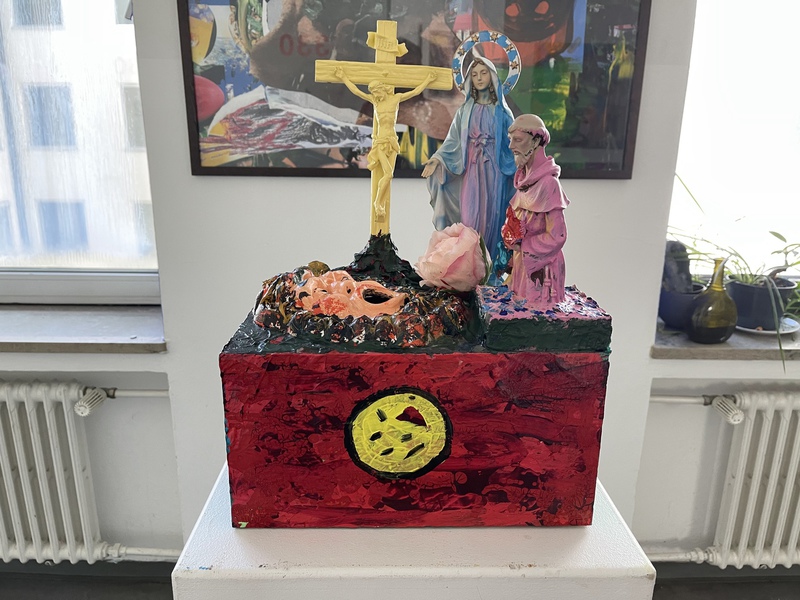
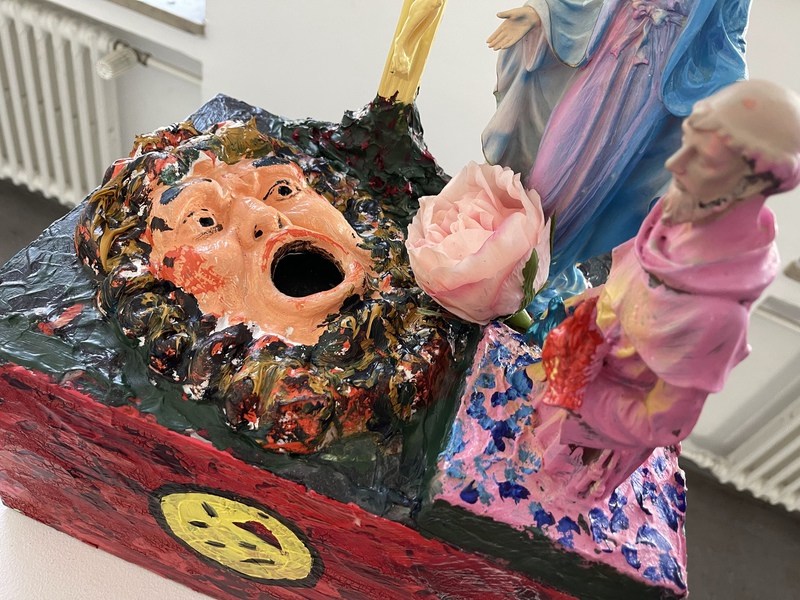
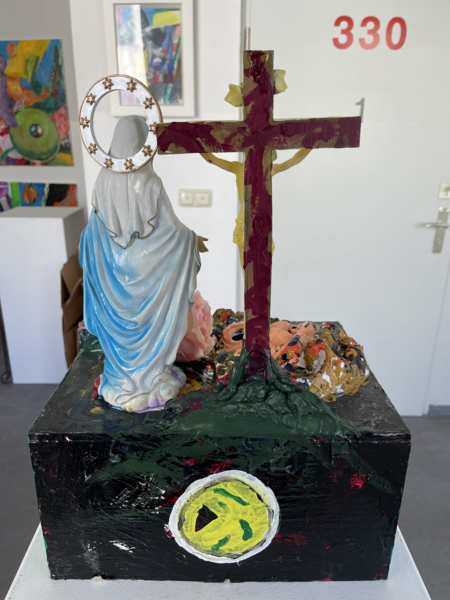
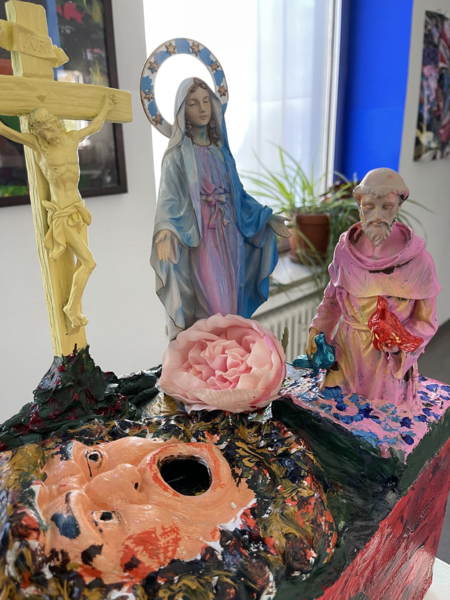
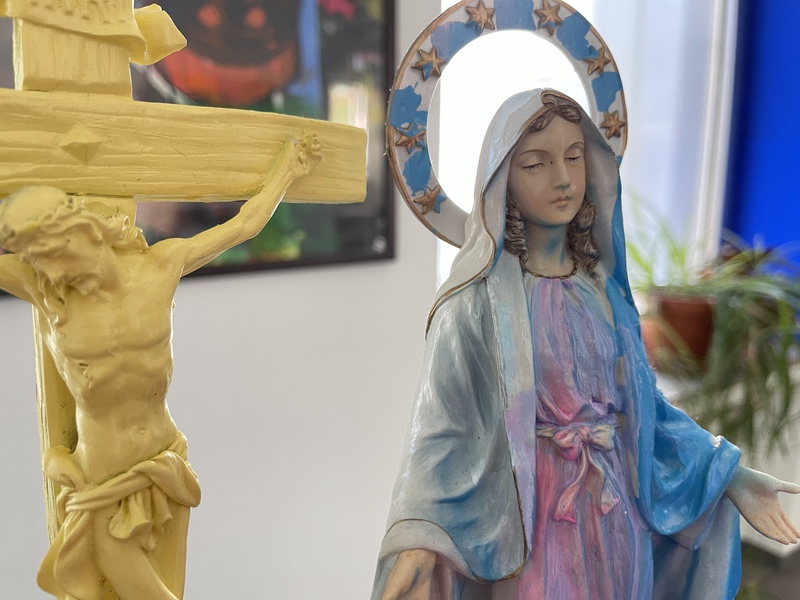
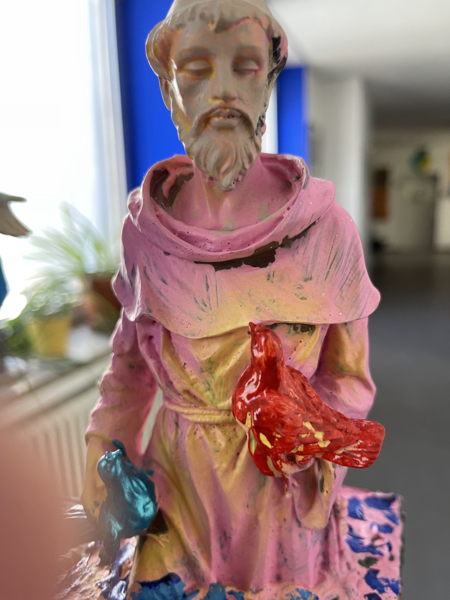
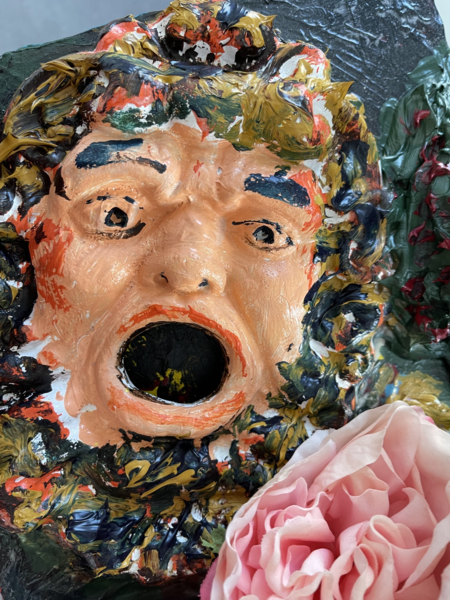
Diese Plastik stellt die Kreuzigung Christi mit seiner Mutter Maria und dem hl. Franziskus dar. Das schreiende Gesicht ist ein übermalter Abguss einer antiken Maske, die ich in einem Andenkenladen einer antiken Stätte gekauft habe.
Die Plastik spielt mit dem traditionellen katholischen Andachtsbild, macht es aber durch Übermalung und Verfremdung zeitgenössisch und provokant. Die Figuren (Maria, Jesus, hl. Franziskus) wirken hier nicht erhaben, aber präsent.
Die Verwendung von "Kitsch"-Elementen (Plastikblume, bemalte Heiligenfiguren) zeigt einerseits eine ironische oder kritische Ebene, verweist andererseits auch auf die emotionale Valenz des Kitsches.
Die Theatermaske aus der griechisch-römischen Antike bringt das antike Verständnis von Leiden ins Spiel: Leid als etwas Unausweichliches, ohne Hoffnung auf Erlösung. Vielleicht auf Katharsis?
Jedenfalls steht die antike Konzeption der Tragik im Gegensatz zur christlichen Erlösungs-Botschaft, die gerade die Tragik damit zu überwinden trachtet.
This sculpture depicts the Crucifixion of Christ with his mother Mary and St. Francis. The screaming face is a repainted cast of an ancient mask that I bought in a souvenir shop at an archaeological site.
The sculpture plays with the traditional Catholic devotional image, but makes it contemporary and provocative through repainting and alienation. The figures (Mary, Jesus, St. Francis) do not appear sublime here, but they are present.
The use of “kitsch” elements (plastic flower, painted saint figures) reveals an ironic or critical layer on the one hand, while also pointing to the emotional resonance of kitsch on the other.
The theatrical mask from Greco-Roman antiquity brings the ancient understanding of suffering into play: suffering as something inevitable, without hope of redemption. Perhaps of catharsis?
In any case, the ancient conception of tragedy stands in contrast to the Christian message of redemption, which seeks precisely to overcome tragedy.
 Druckversion