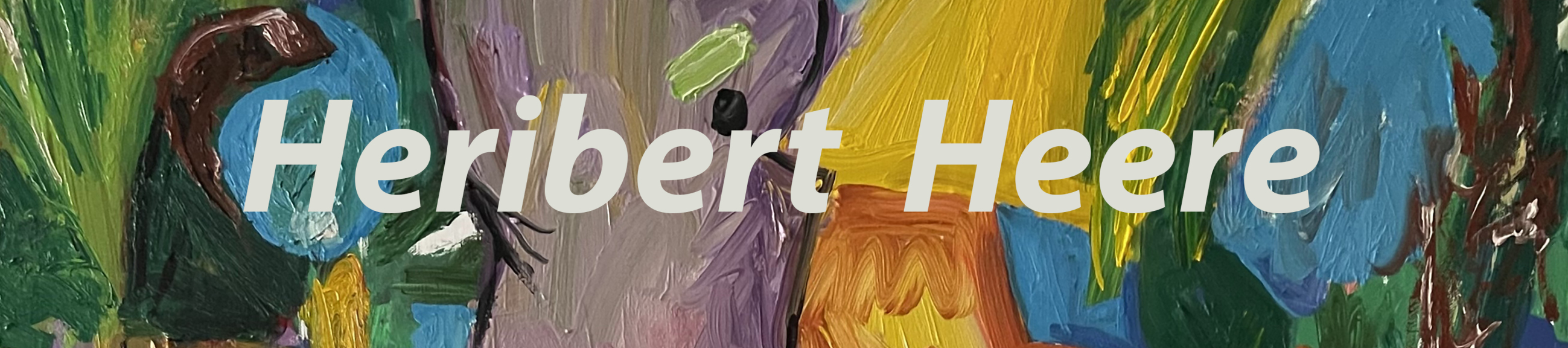
Künstler  Asket  Narr


„Was bedeuten eigentlich asketische Ideale?“ – fragt sich Nietzsche in der „Genealogie der Moral“ (1) Diese Frage richtet sich nicht allein an die Askese, sondern an einen Kulturtypus, der vom unbedingten Willen zur Wahrheit getragen wird. Dieser Wille durchzieht die abendländische Geschichte als Vorrang der Vernunft, der Logik, der Dialektik und schließlich der Wissenschaft. Das asketische Ideal erscheint dabei als die tiefste, oft unbewusste Moral der Erkenntnis selbst.

Nietzsche erkennt in diesem Ideal eine paradoxe Struktur: Es tritt im Namen der Lebensverbesserung auf, erzeugt jedoch einen fundamentalen Widerwillen gegen das Leben. Denn es misst das Leben an Maßstäben, die ihm fremd sind – Reinheit, Widerspruchslosigkeit, Wahrheit um jeden Preis.


Sokrates und der theoretische Optimismus


Als ersten großen Protagonisten dieses Kulturtypus identifiziert Nietzsche Sokrates. Dieser verkörpert für ihn den „theoretischen Optimisten“, der an die vollständige Ergründbarkeit der Welt glaubt und dem Wissen die Kraft einer Universalmedizin zuschreibt. Irrtum gilt hier als das Übel an sich, Erkenntnis als Heilmittel.

Nietzsche erkennt ausdrücklich die Vorzüge der sokratischen Welt: begriffliche Klarheit, die Fähigkeit zur Unterscheidung von Schein und Irrtum, sittliche Ideale wie Mitleid, Aufopferung und Heroismus, ja sogar eine schwer errungene Heiterkeit und Daseinsseligkeit. Diese gelten ihm als hohe menschliche Errungenschaften. Doch gerade diese Welt ruht auf einem Glauben, dem gegenüber „uns keine Wahl bleibt“: dem Glauben an den unbedingten Wert der Wahrheit.


Der Wille zur Wahrheit als lebensfeindliches Prinzip


Nietzsches entscheidender Einspruch setzt beim Leben selbst an. Dieses ist, so seine Diagnose, nicht auf Wahrheit, sondern auf Irrtum, Täuschung, Verstellung, Blendung und Selbstverblendung angelegt. Der Wille zur Wahrheit richtet sich daher gegen die elementaren Lebensbedingungen. Er wird zu einem lebensfeindlichen, ja zerstörerischen Prinzip.

Damit entlarvt Nietzsche die Wissenschaft als moralisch grundierte Praxis. Sie bejaht implizit eine andere Welt als die der Natur, der Geschichte und des gelebten Lebens. Diese wirkliche Welt erscheint aus wissenschaftlicher Perspektive als defizitär, unmoralisch oder bloß vorläufig. Die Wahrheit wird zum Maßstab, vor dem sich das Leben rechtfertigen soll – und an dem es notwendig scheitert.


Künstler und theoretischer Mensch


Dieser Gegensatz findet seine paradigmatische Ausformulierung in Nietzsches Unterscheidung zwischen Künstler und theoretischem Menschen. Während der theoretische Mensch seine höchste Lust im Prozess der Enthüllung findet und in jeder abgeworfenen Hülle einen Fortschritt sieht, bleibt der Künstler an dem hängen, was auch nach jeder Enthüllung noch Hülle bleibt.

Der Künstler weiß, dass der Schein nicht das Gegenteil der Wahrheit ist, sondern ihre Bedingung. Wo der theoretische Mensch den Schein überwinden will, gestaltet der Künstler ihn. Wahrheit ist für diesen nicht Ziel, sondern Gefahr: Sie zerstört die lebensnotwendigen Illusionen, ohne neue Formen der Bejahung bereitzustellen.

"Wenn nämlich der Künstler bei jeder Enthüllung der Wahrheit immer nur mit verzückten Blicken an dem hängen bleibe, was auch jetzt, nach der Enthüllung, noch Hülle bleibt, genieße und befriedige sich der theoretische Mensch an der abgeworfenen Hülle und habe sein höchstes Lustziel in dem Prozess einer immer glücklichen, durch eigene Kraft gelingende Enthüllung." (Nietzsche, Die Geburt der Tragödie, 15")


Perspektivismus


Demgegenüber ginge es um einen Phänomenalismus und Perspektivismus, um ein Bewusstsein, dass unsere Welt eine Oberflächen- und Zeichenwelt ist, ja, dass der zeichen-erfindende Mensch zugleich der immer schärfer seiner selbst bewusste Mensch ist.

Allerdings kann damit nicht ohne weiteres auf einen irgendwie erweiterten Begriff der Wahrheit geschlossen werden. Wenn alles Oberfläche und Zeichen ist, muss notwendigerweise der Meister der Oberflächen, der Verstellung, der Masken, also der Schauspieler der moderne Typus par excellence sein. Und in der Tat hat Nietzsche "das Problem des Schauspielers am längsten beunruhigt“. Einerseits gilt dieser ihm als dekadenter anbiedernder Typus, andererseits sei gerade der dionysisch-apollinische Künstler, dessen "Artistenmetaphysik“ beinahe das Credo der "tragischen Erkenntnis“ darstellt, ein Produkt der "eingefleischten Kunst der ewigen Versteckspielens“. Die Genealogie des Künstlers wäre der "Possenreißer, Lügenerzähler, Hanswurst, Narr, Clown, Gil Blas." Denn in solchen Typen habe man die Vorgeschichte des Künstlers und oft genug sogar des Genies. (Nietzsche, Fröhliche Wissenschaft 5, 361)


Aus dieser Einsicht entwickelt Nietzsche seinen Phänomenalismus und Perspektivismus. Die Welt ist keine Ding-an-sich-Welt, sondern eine Oberflächen- und Zeichenwelt. Erkenntnis ist kein Abbilden, sondern Interpretieren; das Subjekt keine feste Substanz, sondern ein Knotenpunkt von Perspektiven.

Diese Einsicht radikalisiert das Problem der Wahrheit. Wenn es keinen privilegierten Zugang zum Sein gibt, verliert der Wahrheitsmensch seine metaphysische Sonderstellung. An seine Stelle tritt ein anderer Typus: der Meister der Oberfläche, der Zeichen, der Inszenierung.


Der Schauspieler


Hier tritt der Schauspieler auf – Nietzsches „moderner Typus par excellence“. Kaum eine Figur hat ihn stärker beunruhigt. Einerseits erscheint der Schauspieler als dekadenter, anbiedernder Mensch ohne innere Notwendigkeit, der sich nach dem Publikum formt und jede Haltung wie ein Kostüm wechselt. Er ist reaktiv, abhängig, ohne schöpferisches Zentrum.

Andererseits ist gerade der höchste Künstler ohne Masken, Rollen und Verstellung nicht denkbar. Der dionysisch-apollinische Künstler schafft Formen, in denen das Chaos des Lebens sichtbar, erquicklich und bejahbar wird. Seine Masken sind keine Flucht, sondern Ausdruck von Macht: Er beherrscht den Schein, statt ihm zu erliegen


Nietzsche treibt diese Ambivalenz genealogisch auf die Spitze, wenn er den Ursprung des Künstlers im Possenreißer, Lügenerzähler, Hanswurst, Narren und Clown verortet. Diese Figuren stehen für eine Praxis der Wirkung, nicht der Wahrheit. Sie arbeiten mit Affekten, Übertreibung, Täuschung, Spiel:

"...als Instinkt andre Instinkte kommandiren lernt und den Schauspieler, den "Künstler" erzeugt (den Possenreisser, Lügenerzähler, Hanswurst, Narren, Clown zunächst, auch den classischen Bedienten, den Gil Blas: denn in solchen Typen hat man die Vorgeschichte des Künstlers und oft genug sogar des "Genies")."(2)


Gerade darin erkennt Nietzsche ihre Nähe zum Genie. Der Narr unterläuft Ordnung nicht argumentativ, sondern performativ. Er zeigt, dass Ernst, Moral und Wahrheit selbst Masken sind. Damit steht er quer zum asketischen Ideal, das Einheit, Reinheit und Ernst verlangt.

Nietzsche spricht hier nicht von der realen historischen Genealogie des Künstlers. So wurde der Maler und Bildhauer seit der Antike nie als "Narr" oder "Possenreißer" angesehen, sondern als geschickter Handwerker, der z.B. Früchte so täuschend ähnlich malen konnte, dass selbst Vögel darauf hereinfielen. Erst ab der Frührenaissance begann sich der bildende Künstler vom Handwerkertum hin zum gottähnliche Schöpfer zu emanzipieren, der sogar als über der Natur stehend verehrt wurde (Raffael, Michelangelo). Die performativen Künstlerinnen und Künstler dagegen waren bis zur Moderne meist weniger angesehen. In der Moderne scheint sich dann dieses Verhältnis geradezu umgekehrt zu haben.

Nietzsche geht es dagegen um die Bedeutung von Wahrheit und Lüge, bzw. um deren Umdeutung und Umwertung von Kunst und Kultur, von Illusion und Realität, von Spiel  und Maske.

Deshalb kann er auch im Schauspieler den Künstler par excellence erkennen.


Kunst als Theodizee


An diesem Punkt kulminiert Nietzsches Denken in einer radikalen Umwertung des Theodizee-Gedankens. Klassische Theodizeen rechtfertigen Gott angesichts des Übels. Nietzsche verwirft dieses Modell. Nicht Gott, sondern das Dasein selbst steht zur Rechtfertigung an.

Diese Rechtfertigung kann weder moralisch noch wissenschaftlich erfolgen. Moral verurteilt, Wissenschaft erklärt – keine von beiden bejaht. Nur die Kunst vermag dies. Sie verwandelt Leiden nicht in Sinn, sondern in Form. Sie behauptet nicht, dass alles gut sei, sondern dass alles darstellbar, gestaltbar, tragbar ist.

Die tragische Kunst ist dabei der höchste Ausdruck dieser Haltung: Sie zeigt das Grauen, ohne es zu entschärfen, und bejaht das Leben gerade in seiner Härte.


Der Künstler als Narr und Schauspieler ist somit Nietzsches zentrale Gegenfigur zum asketischen Ideal. Er weiß, dass es keine letzte Wahrheit gibt – und gerade deshalb wird er schöpferisch. Nicht Entsagung, sondern Stil; nicht Wahrheit, sondern Gestaltung; nicht Weltflucht, sondern ästhetische Verwandlung.

Narren sind selten Asketen. Und wenn sie es doch sind, dann nur in einer verfehlten, närrischen Form: wenn sie ihre Maske für ein Gesicht halten und ihren Stil zur Wahrheit erklären. Der Künstler hingegen bleibt Spieler. In diesem Spiel liegt für Nietzsche die höchste Form der Lebensbejahung.


(1) Friedrich Nietzsche, Zur Genealogie der Moral III, 1-10

(2) Friedrich Nietzsche, Die fröhliche Wissenschaft V, 361


Artist Ascetic Fool


“What do ascetic ideals actually mean?”—Nietzsche asks in *On the Genealogy of Morals* (1). This question is directed not merely at asceticism, but at a cultural type driven by an unconditional will to truth. This will pervades Western history as the primacy of reason, logic, dialectic, and ultimately science. The ascetic ideal thus appears as the deepest, often unconscious morality of knowledge itself.

Nietzsche recognizes a paradoxical structure in this ideal: It appears in the name of improving life, yet generates a fundamental aversion to life. For it measures life by standards that are foreign to it—purity, consistency, truth at any price.


Socrates and Theoretical Optimism


Nietzsche identifies Socrates as the first major protagonist of this cultural type. For him, Socrates embodies the “theoretical optimist,” who believes in the complete fathomability of the world and attributes to knowledge the power of a universal remedy. Here, error is regarded as evil in itself, and knowledge as the remedy.

Nietzsche explicitly recognizes the merits of the Socratic world: conceptual clarity, the ability to distinguish between illusion and error, moral ideals such as compassion, self-sacrifice, and heroism, and even a hard-won serenity and joy in existence. He regards these as great human achievements. Yet it is precisely this world that rests on a belief against which “we have no choice”: the belief in the unconditional value of truth.


The Will to Truth as a Life-Hostile Principle


Nietzsche’s decisive objection takes its starting point in life itself. According to his diagnosis, life is not founded on truth, but on error, deception, pretense, delusion, and self-deception. The will to truth is therefore directed against the elementary conditions of life. It becomes a life-hostile, indeed destructive, principle.

In doing so, Nietzsche exposes science as a morally grounded practice. It implicitly affirms a world other than that of nature, history, and lived life. From a scientific perspective, this real world appears deficient, immoral, or merely provisional. Truth becomes the standard against which life must justify itself—and against which it necessarily fails.


The Artist and the Theoretical Man


This contrast finds its paradigmatic expression in Nietzsche’s distinction between the artist and the theoretical man. While the theoretical man finds his highest pleasure in the process of unveiling and sees progress in every discarded shell, the artist remains attached to what remains a shell even after every unveiling.

The artist knows that appearance is not the opposite of truth, but its condition. Where the theoretical man seeks to overcome appearance, the artist shapes it. For the artist, truth is not a goal but a danger: it destroys the illusions essential to life without providing new forms of affirmation.

“For if, at every unveiling of the truth, the artist were to cling only with rapt gazes to that which remains a shell even now, after the unveiling, the theoretical man would delight in and be satisfied by the discarded shell and find his highest pleasure in the process of an ever-joyful unveiling achieved through his own power.”

(Nietzsche, The Birth of Tragedy, 15)


Perspectivism


In contrast, this would involve a form of phenomenalism and perspectivism—an awareness that our world is a world of surfaces and signs, indeed, that the sign-inventing human is at the same time the human who is ever more acutely conscious of himself.

However, this does not automatically lead to some sort of expanded concept of truth. If everything is surface and sign, then the master of surfaces, of pretense, of masks—that is, the actor—must necessarily be the modern type par excellence. And indeed, Nietzsche was “most troubled by the problem of the actor.” On the one hand, he regards the actor as a decadent, sycophantic type; on the other hand, it is precisely the Dionysian-Apollonian artist, whose “artistic metaphysics” almost constitutes the credo of “tragic insight,” who is a product of the “ingrained art of the eternal game of hide-and-seek.” The genealogy of the artist would be the “buffoon, liar, harlequin, fool, clown, Gil Blas.” For in such types one finds the prehistory of the artist and often enough even of the genius. (Nietzsche, The Gay Science 5, 361)


From this insight, Nietzsche develops his phenomenalism and perspectivism. The world is not a world of things-in-themselves, but a world of surfaces and signs. Knowledge is not representation, but interpretation; the subject is not a fixed substance, but a nexus of perspectives.

This insight radicalizes the problem of truth. If there is no privileged access to being, the man of truth loses his metaphysical special status. In his place steps another type: the master of the surface, of signs, of staging.


The Actor


Here the actor appears—Nietzsche’s “modern type par excellence.” Hardly any figure has unsettled him more. On the one hand, the actor appears as a decadent, ingratiating person without inner necessity, who molds himself to the audience and changes every posture like a costume. He is reactive, dependent, without a creative center.

On the other hand, the highest artist is inconceivable without masks, roles, and pretense. The Dionysian-Apollonian artist creates forms in which the chaos of life becomes visible, invigorating, and affirmable. His masks are not an escape, but an expression of power: he masters appearance rather than succumbing to it

Nietzsche takes this ambivalence to its genealogical extreme when he locates the origin of the artist in the buffoon, the liar, the Hanswurst, the fool, and the clown. These figures represent a practice of effect, not of truth. They work with affects, exaggeration, deception, and play:

"... as instinct learns to command other instincts and produces the actor, the ‘artist’ (the buffoon, the liar-storyteller, the Hanswurst, the fool, the clown at first, and also the classical servant, the Gil Blas: for in such types one finds the prehistory of the artist and often enough even of the ‘genius’).” (2)


It is precisely in this that Nietzsche recognizes their proximity to genius. The fool subverts order not through argumentation, but through performance. He shows that seriousness, morality, and truth are themselves masks. In doing so, he stands at odds with the ascetic ideal, which demands unity, purity, and seriousness.

Nietzsche is not speaking here of the actual historical genealogy of the artist. Since antiquity, the painter and sculptor have never been regarded as “fools” or “buffoons,” but rather as skilled craftsmen who, for example, could paint fruit so deceptively lifelike that even birds were fooled by it. It was not until the early Renaissance that the visual artist began to emancipate himself from the status of a craftsman and become a god-like creator, who was even revered as standing above nature (Raphael, Michelangelo). Performing artists, on the other hand, were generally less esteemed until the modern era. In the modern era, this relationship seems to have been virtually reversed.

Nietzsche, however, is concerned with the meaning of truth and falsehood, or rather with their reinterpretation and revaluation of art and culture, of illusion and reality, of play and mask.

That is why he can also recognize the artist par excellence in the actor.


Art as Theodicy


At this point, Nietzsche’s thought culminates in a radical revaluation of the concept of theodicy. Classical theodicies justify God in the face of evil. Nietzsche rejects this model. It is not God, but existence itself that must be justified.

This justification can be achieved neither morally nor scientifically. Morality condemns, science explains—neither affirms. Only art is capable of this. It transforms suffering not into meaning, but into form. It does not claim that everything is good, but that everything is representable, shapeable, bearable.

Tragic art is the highest expression of this attitude: it shows horror without defusing it, and affirms life precisely in its harshness.

The artist as fool and actor is thus Nietzsche’s central counterfigure to the ascetic ideal. He knows that there is no ultimate truth—and precisely for this reason he becomes creative. Not renunciation, but style; not truth, but creation; not escapism, but aesthetic transformation.

Fools are rarely ascetics. And if they are, then only in a misguided, foolish form: when they mistake their mask for a face and declare their style to be truth. The artist, on the other hand, remains a player. For Nietzsche, this play represents the highest form of affirmation of life.


(1) Friedrich Nietzsche, On the Genealogy of Morals III, 1-10

(2) Friedrich Nietzsche, The Gay Science V, 361


Druckversion | Sitemap
© heereart