
Models
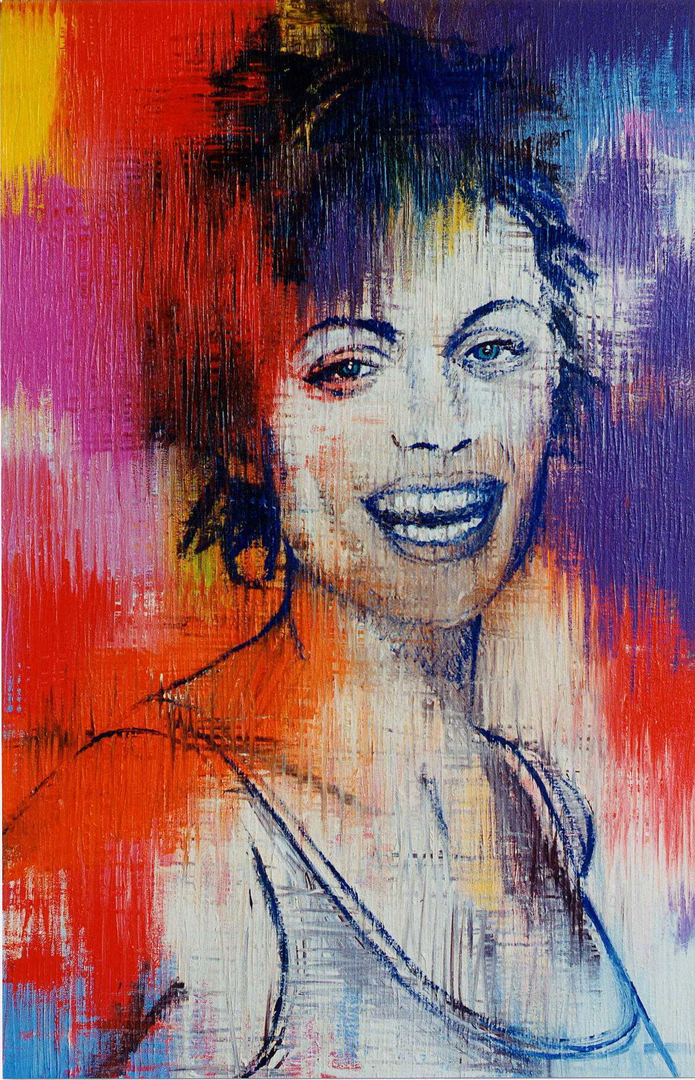
Beri, 1994, Öl auf Leinwand, 130 x 85 cm
Models verfügen nicht nur über einen, sondern über zwei kategorial verschiedene Körper, einmal ihren leiblichen Körper, wie wir alle auch - und zum anderen über ihren Bildkörper.
Models have not just one, but two distinct types of bodies: their physical body, just like the rest of us, and their on-screen body.
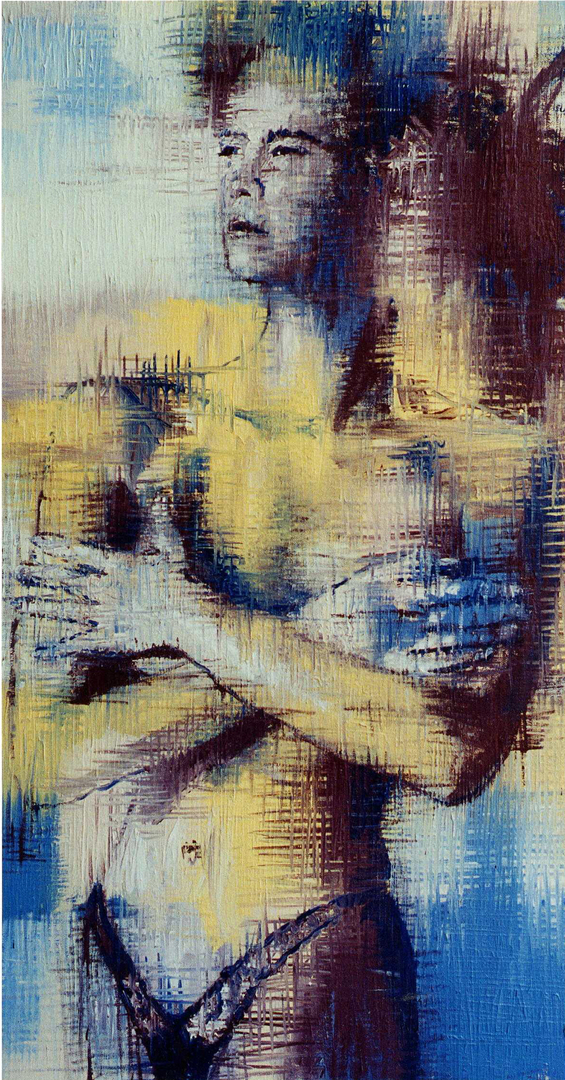
Elle, 1994, Öl auf Leinwand, 160 x 85 cm
"Die „Wiederentdeckung“ des Körpers nach der tausendjährigen Ära des Puritanismus, unter dem Zeichen der körperlichen und sexuellen Befreiung, seine Allgegenwart (speziell des weiblichen Körpers) in Werbung, Mode, Massenkultur; der Hygiene-, Diät-, Therapiekult, in den er eingebunden ist, der Jugendwahn, die Obsession von Eleganz und Männlichkeit/Weiblichkeit, die Pflege- und Nahrungsergänzungsmittel, die Opferpraktiken, die sich mit ihm verbinden, der Mythos von Sinnenfreude, der ihn umgibt – all dies zeugt heute davon, dass der Körper zum Objekt des Heils geworden ist. In dieser moralischen und ideologischen Funktion hat er sich buchstäblich an die Stelle der Seele gesetzt."
Jean Baudrillard
"The ‘rediscovery’ of the body following a thousand-year era of Puritanism, marked by physical and sexual liberation; its omnipresence (especially that of the female body) in advertising, fashion, and popular culture; the cult of hygiene, diet, and therapy in which it is embedded, the obsession with youth, the obsession with elegance and masculinity/femininity, the skincare and dietary supplements, the sacrificial practices associated with it, the myth of sensual pleasure that surrounds it—all of this testifies today to the fact that the body has become the object of salvation. In this moral and ideological function, it has literally taken the place of the soul."
Jean Baudrillard

Naomi 2, 1994, Öl auf Leinwand, 130 x 85 cm
Baudrillard spielt in einer komplexen Denkfigur auf die in allen Kulturen – bis auf die Moderne – übliche Vorstellung einer unsterblichen Seele und eines sterblichen Körpers an. Er sagt nicht, der moderne Körper habe den früheren Körper ersetzt und damit die Seele mit all den ewigen, unzerstörbaren, seienden Qualitäten als Fiktion entlarvt und damit überflüssig gemacht, sondern er belässt grundsätzlich diesen Gegensatz, nur mit dem Unterschied, dass gegenüber dem sterblichen normalen Körper sich anstatt der Seele ein neuer wunderbarer Körper „mit all seinen moralischen und ideologischen Funktionen als ein Objekt des Heils“ gesetzt habe.
Statt des Seelenheils ein neues „Körperheil“!
In a complex conceptual framework, Baudrillard alludes to the notion of an immortal soul and a mortal body, a concept common to all cultures—with the exception of modernity. He does not say that the modern body has replaced the earlier body and thereby exposed the soul—with all its eternal, indestructible, being-related qualities—as fiction and thus rendered it superfluous; rather, he essentially retains this opposition, with the sole difference that, in contrast to the mortal, normal body, a new, wondrous body “with all its moral and ideological functions as an object of salvation” has taken the place of the soul.
Instead of the salvation of the soul, a new “salvation of the body”!
 Teilen
 Druckversion